
Data Has to Lead the Recovery

By Pinpoint Guam
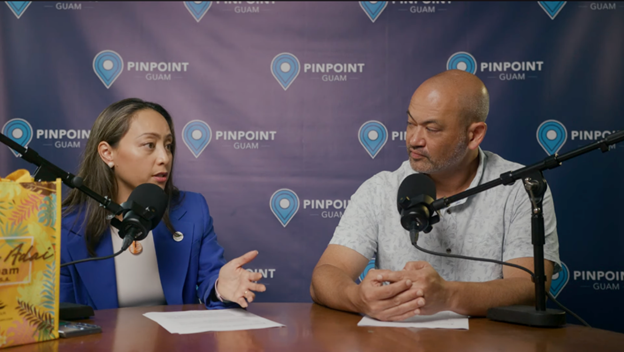
Quick answer: Guam’s tourism recovery is not just about spending more money. It is about knowing where to spend, which markets are actually moving, what visitors are doing, and how much revenue the island is leaving on the table. When Datapoints sat down with Mary Paulino Rhodes, president of the Guam Hotel and Restaurant Association (GHRA), she highlighted that Guam has the pieces to rebuild tourism, but the island has to stop guessing and start using the data.

Guam tourism is not dead, but it is not back either.
That is the tension Mary Paulino Rhodes lives in every day as president of the Guam Hotel and Restaurant Association. She has spent 19 years leading GHRA, working across administrations, agencies, hotels, restaurants, airlines, workforce programs, and regulatory issues. Her read on the market is direct: there is movement, but Guam cannot mistake movement for recovery.
Japan is improving. Korea is moving from charters back to scheduled flights. Military business helped hotels survive during the worst of COVID. But leisure travel is still not where it needs to be. Mary sees the progress. She also sees the gap.
Flights Matter, But Confidence Matters More
During COVID, Guam hotels leaned heavily on military business. Mary said military grew from about 11% of hotel business to almost 80% at one point. Leisure travel is now returning, but the source markets are still rebuilding.
Japan has climbed back to about 30% of pre-COVID levels. Korea is still below prior levels, but the big shift is that Guam is no longer relying only on charter flights from Korea. Scheduled flights give travelers, airlines, hotels, and wholesalers more confidence. People can book further out. Packages can be built. The market can breathe. Mary called that “a huge milestone” for Guam.
But she also said this recovery is setting up 2026 more than fixing 2025. That is the right way to look at it. Tourism does not come back because one announcement sounds good. It comes back when the market believes Guam is worth booking again.
Guam Needs Better Tourism Data
Mary’s strongest point was about data. Guam Visitors Bureau (GVB) has arrival data. Hotels use STR (or STAR) reports. Agencies have import, export, tax, and business data. Restaurants, retailers, airlines, optional tours, and wholesalers all hold pieces of the picture. But the data is scattered. Mary said GVB needs to rebuild its full research department, restart exit surveys, and consistently use tools like tourism economics, Symphony, and STR-style market reports.
Why does that matter? Because tourism strategy cannot be based on vibes. Guam needs to know where visitors are going, what they are spending, how long they are staying, what they are buying, what tours they are taking, what restaurants they visit, and which markets produce the best return. Without that, the island can spend millions and still not know what worked.
Per Diem Proves Data Works
Mary gave one of the cleanest examples of why data matters: federal per diem. For years, Guam’s per diem rate sat flat while other markets moved. Hawaii and Saipan received increases, while Guam was bypassed. The difference was data. Once Guam had better hotel rate reporting through tools like STR, GHRA and its partners were able to show the market reality and push for change.
That is not theory. That is money.
Per diem affects hotels, restaurants, workers, suppliers, and the broader visitor economy. Better data helped Guam make the case. That same discipline needs to be applied across tourism.
Stop Treating Tourism Like GVB’s Job Alone
Mary was clear that GVB matters. But tourism recovery cannot be dumped on GVB alone. GVB is the marketing arm, GEDA has economic development responsibilities. The airport controls key access points, GHRA represents operators, Public Health, Department of Labor, GRTA, RevTax, Customs, lawmakers, and the front office all affect the visitor experience. “So why are they not always in the same room?”
Mary said Guam needs a larger collective effort where agencies agree on one or two milestones each that directly support tourism recovery.
That could mean faster health certificates, better workforce programs, better transportation, better data sharing, cleaner destination areas, more support for restaurants, optional tours, and local products. Tourism is not just arrivals. It is an ecosystem.
Transportation Is Workforce Policy
One of GHRA’s biggest workforce issues is not only wages. It is transportation. Mary said transportation is a major cause of call-outs, turnover, shortened shifts, and people not being able to get to work. That affects hotels, restaurants, retail, healthcare, and almost every employer trying to hire.
GHRA has been working with the Guam Regional Transit Authority on better routes, including park-and-ride concepts and shorter shuttle connections from Dededo to major destinations. That may not sound like tourism policy, but it is. If workers cannot get to hotels and restaurants, the visitor experience suffers. If residents cannot get to work, the economy loses. If tourists cannot move around the island easily, they spend less. Transportation is part of recovery.
The Money Is Being Left on the Table
Tourism-related gross receipts tax dropped sharply compared to 2019. Hotel occupancy tax is still below prior levels. When combined with corporate tax, income tax, GRT, and hotel occupancy tax, tourism used to contribute hundreds of millions more than it does now. Her point was simple: “investing in tourism is not charity.”
It is revenue recovery.
If Guam can rebuild visitor volume, spending, and hotel performance, the government gets money back through multiple channels. That is why Mary believes surplus dollars should be reinvested into tourism now, not later.
Final Thought
Mary Rhodes is not asking Guam to throw money at tourism and hope. She is asking Guam to measure, coordinate, and act. The recovery will not come from one campaign, one airline deal, or one agency. It will come from breaking down silos and making better decisions with better information.
Guam needs Japan and Korea back stronger. It needs to understand Taiwan and other emerging markets. It needs to support restaurants, tours, transportation, hotels, local products, and workers. It needs to collect better data and actually use it.
Tourism touches every level of the economy. If Guam wants the revenue back, it has to treat tourism like infrastructure. Because the visitors will not just return because we miss them. We have to give them a reason to come back.
FAQs
Is Guam tourism recovering?
Yes, but slowly. Japan and Korea are improving, and scheduled flights are returning, but Guam is still below pre-COVID tourism levels.
Why do scheduled flights matter?
Scheduled flights make it easier for travelers, wholesalers, hotels, and tour companies to plan ahead. They help rebuild confidence in the market.
What data does Guam tourism need?
Guam needs consistent data on arrivals, visitor spending, hotel occupancy, average daily rates, airline load factors, restaurant sales, retail activity, optional tours, and visitor behavior.
What did the per diem increase do for Guam?
Faster and more predictable permitting, smarter land-use strategies, lower development friction, and targeted fee or tax relief tied to housing production.
Better hotel data helped Guam argue for a federal per diem increase after years of being flat. It showed that data can directly affect revenue.
Why is transportation part of tourism recovery?
Workers need reliable transportation to get to hotels, restaurants, and service jobs. Visitors also need better mobility if Guam wants them to explore and spend more.
What is the main takeaway?
Guam’s tourism recovery should be led by data, not guesswork. The island needs coordinated action, better reporting, and smarter investment to bring the industry back.
This article is based on a Datapoints podcast interview with Mary Rhodes from GHRA, conducted by Ryan Mummert. Watch the full interview on Youtube.
Ryan Mummert is the President of Pinpoint Guam and a trusted voice in Guam real estate. With deep experience across the U.S. mainland and locally, he has made it his mission to break down data silos and bring transparency to Guam’s real estate market—empowering businesses, investors, and communities to make smarter, more informed decisions.
Comments